How to Make Lawn Grass Thick & Dense: Aeration, Dethatching & Top-Dressing Guide
How to Make Lawn Grass Thick & Dense: Aeration, Dethatching & Top-Dressing Guide
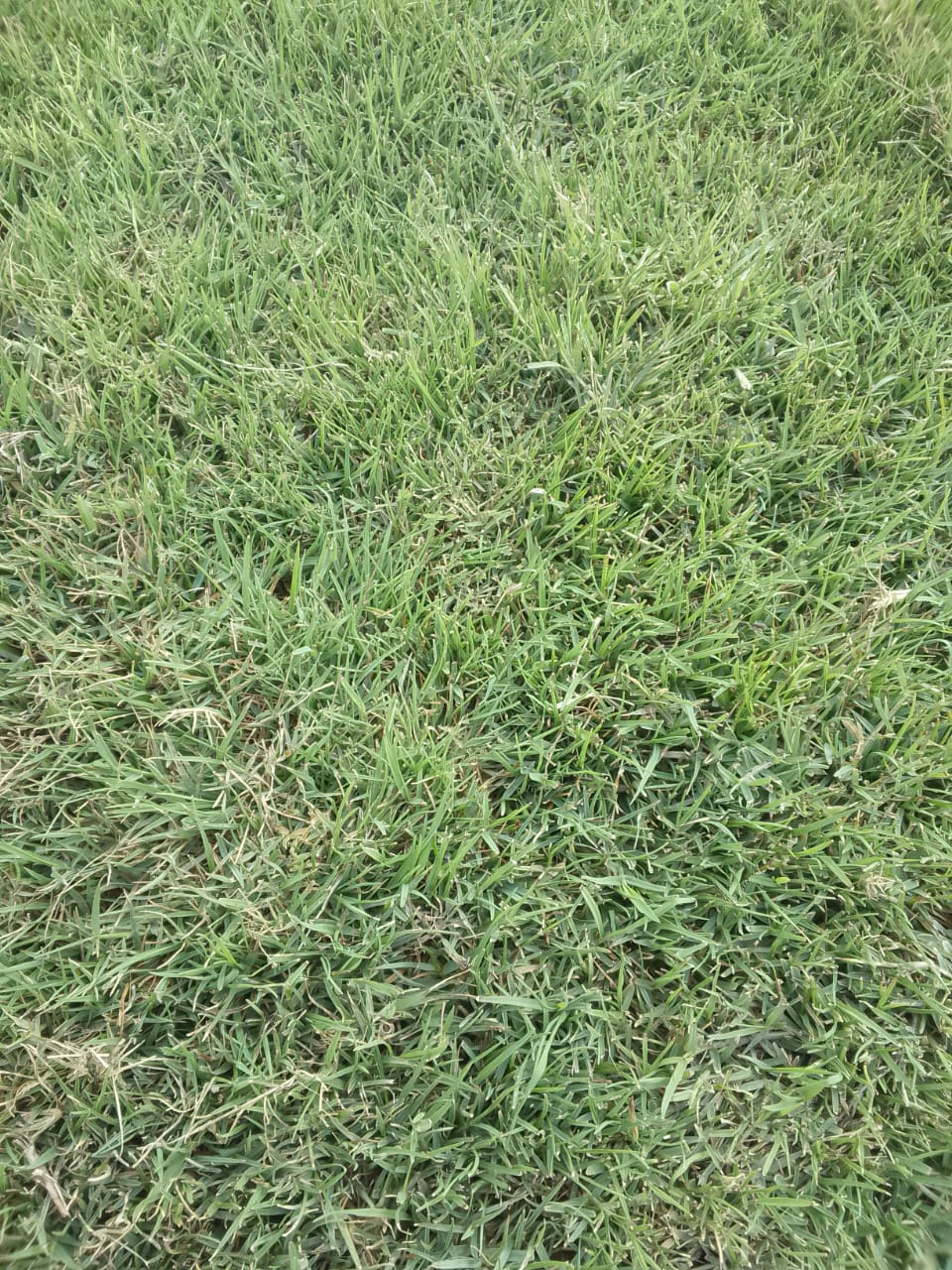
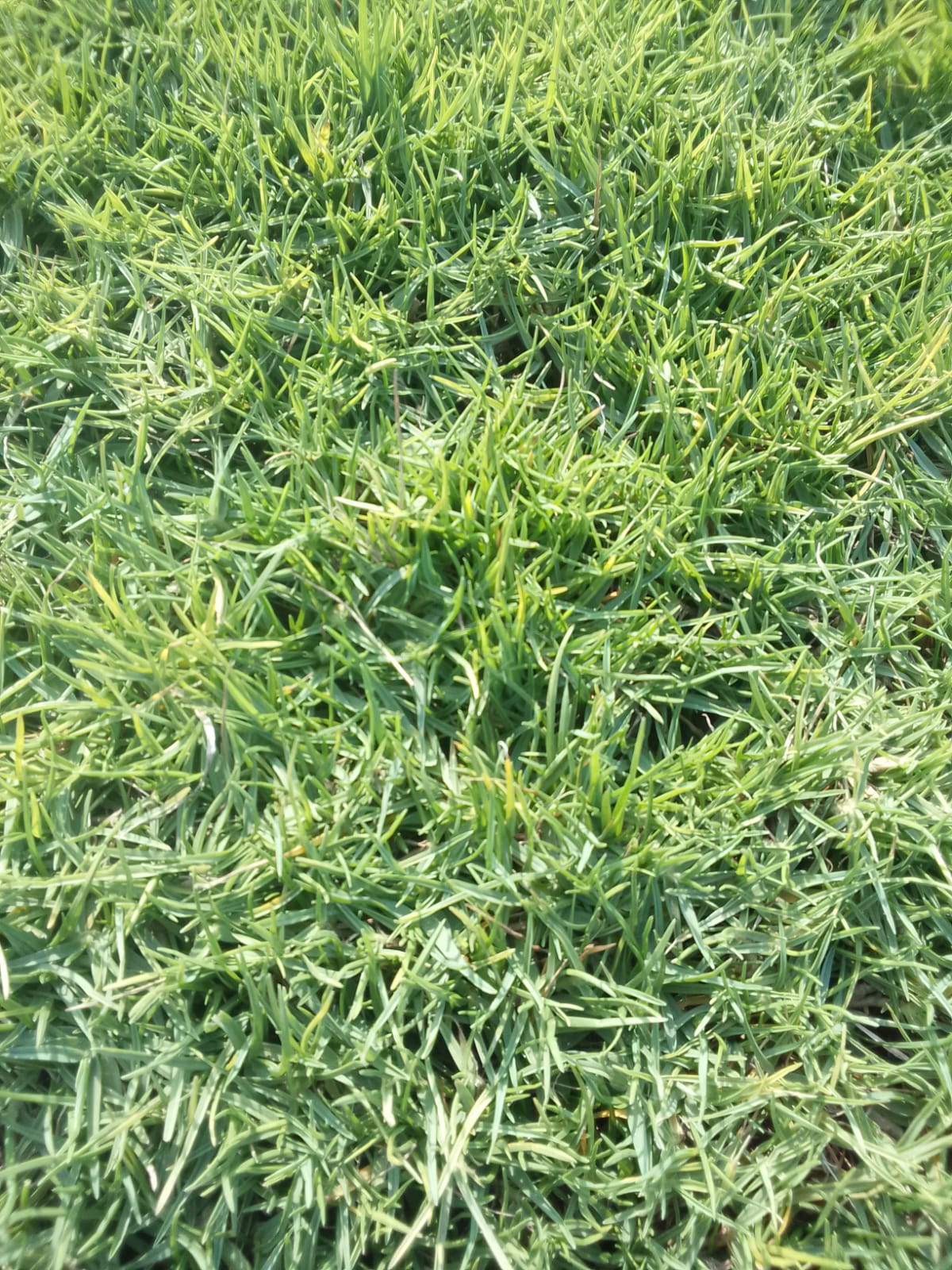
Every homeowner dreams of a lawn that looks and feels like a thick, deep-green, luxurious living carpet. However, after one or two years of heavy footsteps, seasonal temperature swings, and routine mowing, many Indian lawns begin to lose their vigor. Grass blades thin out, unsightly yellow patches appear, soil becomes rock-hard, and weeds aggressively colonize bare spots.
When turf starts thinning, most homeowners instinctively dump more water and chemical fertilizers on the grass. Yet, nine times out of ten, the problem isn't a lack of fertilizer—it’s choked soil and suffocated roots. Over time, North Indian alluvial clay soils pack tightly into an impenetrable sub-surface crust, while dead organic stems accumulate into a spongy layer of thatch that prevents water, oxygen, and nutrients from ever reaching the root system.
In this definitive lawn renovation masterclass, the master greenkeepers at Kavya Grass Nursery reveal the proven 3-step horticultural process—Core Aeration, Mechanical Dethatching, and Precision Top-Dressing—used by championship golf courses to thicken natural turf into an impenetrable emerald carpet.
1. Anatomy of a Thin, Patchy Lawn
Before fixing your turf, diagnose the root cause of thinning:
- Soil Compaction: Foot traffic, pets, and heavy monsoon rains compact soil particles tightly together, eliminating subterranean micropores. Roots cannot breathe or expand and remain shallow (1 to 2 inches), making grass vulnerable to minor heat fluctuations.
- Excessive Thatch: Thatch is the interwoven mat of dead grass leaves, stolons, and roots that accumulates between green vegetation and the soil surface. A thin layer (< 1/2 inch) is beneficial, but thatch exceeding 3/4 inch acts like a dry sponge, trapping moisture on the surface while roots below starve.
- Scalping with Dull Blades: Cutting grass too low shocks the plant and weakens horizontal runner development.
2. Step 1: Core Aeration (Breathing Life into Compacted Soil)
Core aeration is the single most transformative maintenance procedure you can perform on an established lawn:
- What It Does: A manual core aerator tool or motorized hollow-tine machine punches thousands of small soil plugs (1/2 to 3/4 inch wide, 3 to 4 inches deep) across your lawn, depositing the soil cores onto the surface.
- Why It Works: Pulling hollow plugs immediately relieves lateral soil pressure, allowing compacted clay to relax and expand. It opens direct superhighways for oxygen, irrigation, and organic nutrients to penetrate deep into the rootzone. Within weeks, grass roots proliferate into these open holes, doubling root depth and thickness.
- Best Time to Aerate in North India: Late February to mid-March (early spring awakening) or mid-August to September (monsoon recovery). Never aerate during extreme May–June heatwaves or freezing January cold.
3. Step 2: Dethatching / Verticutting (Clearing the Choked Mat)
If your lawn feels uncomfortably spongy underfoot and water beads up on the surface without penetrating, your lawn requires dethatching:
- Use a Dethatching Rake or Verticutter: A dethatching rake features curved, knife-sharp steel tines designed to reach down into the turf canopy and slice through the thatch layer without uprooting living grass crowns.
- Rake Methodically: Pull the rake firmly across the turf in parallel passes. You will be astonished at the mountain of dead brown organic debris pulled to the surface.
- Rake Away Debris: Collect all extracted thatch and discard it into your compost pit. Removing this dead barrier immediately allows sunlight and air to reach dormant grass crowns, stimulating explosive lateral stolon budding.
4. Step 3: Precision Top-Dressing (The 70:30 Golden Ratio)
Immediately following core aeration and dethatching, apply a thin layer of specialized top-dressing material:
The Master Greenkeeper’s Top-Dressing Formula
The Blend: Mix 70% coarse washed river sand (Badarpur) and 30% well-sifted organic vermicompost or aged cow dung manure.
- Why Sand? Coarse sand particles filter down into the aeration holes, permanently keeping the aeration channels open and preventing clay soil from re-compacting for years.
- Why Vermicompost? Injects beneficial soil microbes, humic acids, and slow-release nitrogen directly into the root zone.
Application: Spread a 1/4 to 1/2-inch layer across the entire lawn using a flat spade or back of a garden rake. Work the mixture into the grass canopy until grass tips remain visible above the dressing. Irrigate thoroughly to wash the blend into the aeration holes.
5. The "Mowing Frequency Secret" to Maximum Density
How you mow dictates whether your grass grows tall and stringy or low, dense, and thick:
- The Hormonal Auxin Trigger: When you trim the top 1/3 of a grass blade, the plant halts vertical apical dominance and redirects growth hormones (auxins) horizontally into lateral stolons and underground rhizomes. Mowing more frequently (every 5 to 7 days in warm weather) forces the grass to spread outward rather than upward, knitting together into an ultra-dense mat that naturally chokes out 99% of weeds.
- Never Cut Below 1.5 to 2 Inches: Scalping grass starves the plant of photosynthetic leaf surface. Keep Selection No. 1 and Mexican grass between 2.0 and 2.5 inches for maximum carpet density.
- Keep Blades Razor Sharp: Dull blades crush grass tips, causing brown discoloration and fungal infection.
6. Repairing Stubborn Bare Patches
For small bare patches (under 1 sq ft):
- Loosen the exposed soil with a khurpi, incorporate vermicompost, and push creeping stolon sprigs from healthy sections of your lawn into the moist earth. They will knit together within 14 days.
For extensive bare patches (over 5 sq ft):
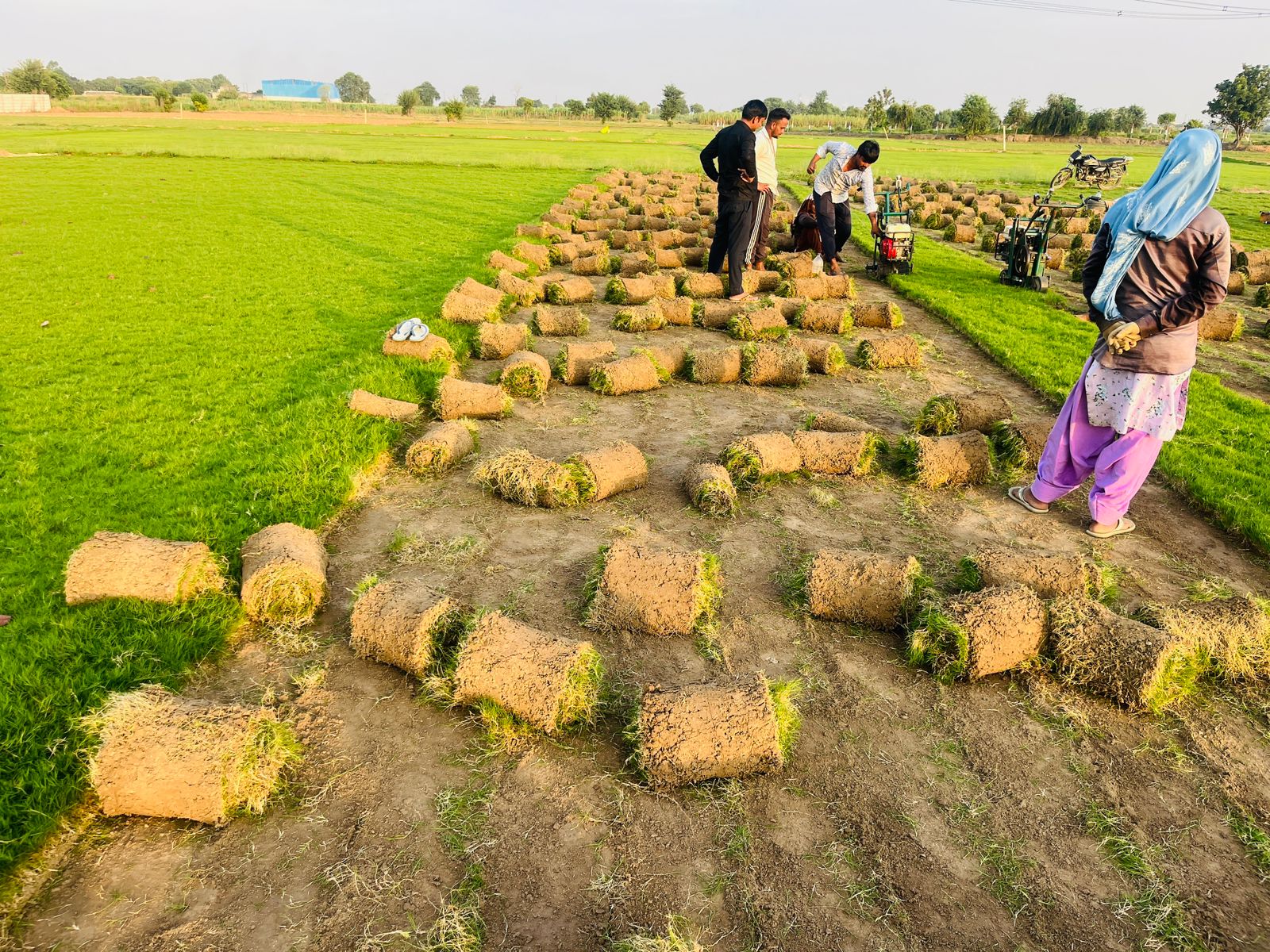
- Do not wait months for slow sprigging. Cut out the dead patch cleanly with a spade, grade the soil, and insert a fresh, ready-to-lay grass carpet slab from Kavya Grass Nursery. Roll and water deeply for an instant, seamless repair.
Summary: The 5-Step Dense Lawn Blueprint
- Core-aerate annually in spring or post-monsoon to eliminate root compaction.
- Dethatch to remove dead spongy organic buildup.
- Top-dress with a 70:30 sand-vermicompost blend to permanently improve drainage.
- Mow weekly following the 1/3 height rule to trigger aggressive lateral stolon spread.
- Water deeply 3 times a week in early morning rather than shallow daily sprinkling.
Revitalize Your Lawn with Kavya Grass Nursery
Is your lawn looking tired, compacted, or thin? Kavya Grass Nursery provides comprehensive lawn renovation services across Delhi NCR, Punjab, and Haryana—including mechanical core aeration, high-grade organic manure and river sand supply, and fresh replacement sod rolls.
Book an On-Site Lawn Health Evaluation: +91-6394742039
Explore Services: Lawn Maintenance Consultancy | Organic Manure & Sand Supply | View Natural Grass Varieties
About the Author
Kavya Grass Nursery is a leading supplier of premium lawn grasses in India. We specialize in Mexican Carpet, Bermuda, and Korean Velvet grass, helping homeowners and businesses create stunning green spaces.