Lawn Mowing Masterclass for Indian Gardens: Cutting Heights, Frequency & Mower Guide
Lawn Mowing Masterclass for Indian Gardens: Cutting Heights, Frequency & Mower Guide
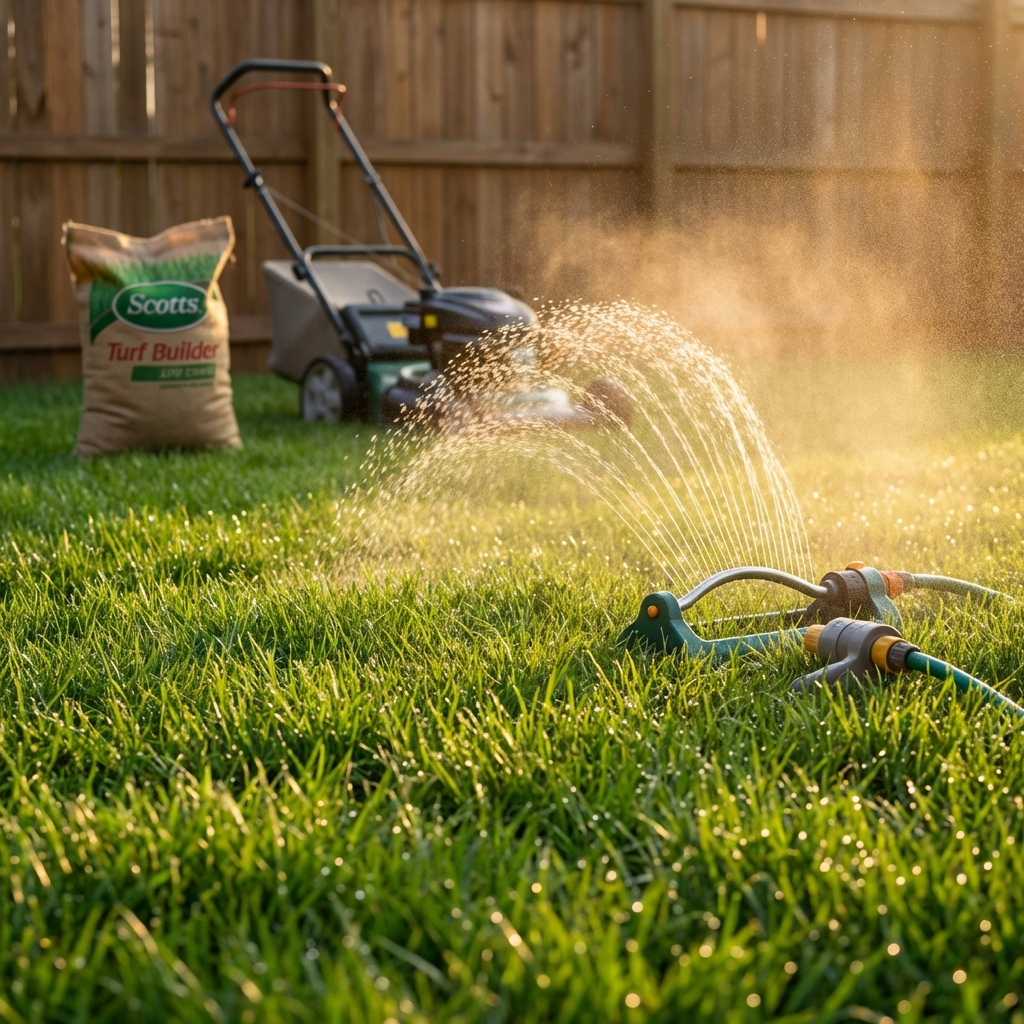
Many homeowners view mowing as a tedious weekend chore or delegate it entirely to an untrained gardener (mali) armed with a blunt scythe (daranti) or rotary string trimmer. However, in turfgrass agronomy, mowing is the single most powerful tool you have to dictate the density, health, and weed resistance of your natural lawn.
Mowing is not merely trimming excess height; it is a surgical growth stimulus. Done correctly, mowing triggers hormonal shifts that force grass to spread horizontally via dense runners and underground rhizomes, creating an impenetrable living carpet that chokes out weeds. Done incorrectly—such as cutting too low (scalping), mowing with dull blades, or cutting at erratic intervals—mowing destroys root depth, exposes soil to weeds, and causes brown fungal dieback.
In this comprehensive masterclass, the greenkeeping team at Kavya Grass Nursery breaks down the essential rules of lawn mowing: the golden one-third rule, optimal cutting heights for North Indian grass varieties, mowing frequency calendars, and how to choose the perfect mower for your property.
1. The Botany of Mowing: Why Trimming Makes Turf Denser
Turfgrass plants possess a biological mechanism known as apical dominance. The growing tip of each grass blade produces hormones called auxins that instruct the plant to grow vertically toward the sun. When you slice off the top of the blade, apical dominance is temporarily broken. The plant redirects energy and auxins horizontally into lateral stolons (above-ground runners) and rhizomes (underground stems).
This lateral spreading causes individual grass plants to knit tightly together. A lawn mown regularly at the correct height develops up to 300% more blade density per square inch than an infrequently mowed lawn, creating that lush, springy, carpet-like cushion underfoot.
2. The Golden Law of Turf: The "One-Third Rule"
Never Remove More Than 1/3 of the Total Blade Height at One Time
If your lawn has grown to 3.0 inches tall, you should cut off no more than 1.0 inch, leaving the grass at 2.0 inches. Why? Because cutting off more than 33% of the photosynthetic leaf tissue puts the grass plant into severe physiological shock. In response to sudden defoliation, the root system halts growth and sheds root hairs to conserve energy, leaving the lawn vulnerable to heat stress and weed invasion.
If your lawn has overgrown due to monsoon rains, never scalp it down in a single pass! Raise your mower deck, cut 1/3 of the height, wait 4 days for the grass to recover, and cut it again down to your target height.
3. Mowing Height Reference Chart by Variety
Every grass variety has a genetically determined optimal height where it achieves maximum density and root health:
| Grass Variety | Recommended Summer Height | Recommended Winter Height | Optimal Mowing Frequency | Best Mower Type |
|---|---|---|---|---|
| Bermuda Grass (Doob) | 1.0 – 1.5 inches | 1.5 – 2.0 inches | Every 5 to 7 days | Cylinder Reel or Rotary |
| Selection No. 1 | 1.5 – 2.5 inches | 2.0 – 2.5 inches | Every 7 to 10 days | Electric or Petrol Rotary |
| Mexican Carpet Grass | 2.0 – 2.5 inches | 2.5 – 3.0 inches | Every 7 to 10 days | Sharp Rotary Mower |
| Korean Velvet (Zoysia) | 1.0 – 1.5 inches | 1.5 inches | Every 18 to 25 days | Cylinder Reel Mower Only |
| Nilgiri Grass (Shade) | 2.5 – 3.0 inches | 3.0 inches | Every 10 to 14 days | Rotary Mower |
4. Lawn Mower Guide: Choosing the Right Machine
A. Manual Push Reel Mower (Best for Lawns Under 1,000 Sq. Ft.)
Uses a scissor-action rotating cylinder of blades against a bedknife. It delivers the cleanest, sharpest cut without petrol emissions or noise, making it ideal for compact residential lawns, Korean Velvet grass, and fine terraces.
B. Electric / Battery-Powered Rotary Mower (Best for 1,000 to 5,000 Sq. Ft. Lawns)
Equipped with a horizontally spinning high-speed blade. Quiet, lightweight, push-button start, and zero oil maintenance. Cordless lithium-ion battery models provide effortless mobility across medium-sized villas in Delhi NCR.
C. Petrol Rotary Mower & Ride-On Zero-Turn Mowers (Best for Large Farmhouses & Resorts)
For farmhouses in Chattarpur, Gurgaon Aravalis, or Ludhiana spanning 5,000 to 50,000+ sq ft, heavy-duty 4-stroke petrol mowers or ride-on mowers are essential to cut large acreage within 1 to 2 hours.
5. The Danger of Dull Mower Blades
Sharpening your lawnmower blade at least twice a year is non-negotiable:
- Dull Blades Tear: A dull blade rips and shreds grass tips instead of slicing them cleanly. Frayed, jagged tips turn straw-colored and give your entire lawn an ugly whitish-brown appearance.
- Disease Entryway: Shredded tips take 3 times longer to heal, creating wide open wounds that invite fungal pathogens like Brown Patch and Leaf Spot.
6. Should You Bag or Mulch Grass Clippings?
If you mow regularly following the 1/3 rule, leave the fine clippings on the lawn (mulching). Short clippings break down within 48 hours, returning up to 25% of the lawn's nitrogen requirements back to the soil for free! However, if grass has overgrown or shows signs of fungal infection, bag and remove the clippings to prevent thatch buildup and disease spread.
Expert Turf & Maintenance Support from Kavya Nursery
Need professional lawn care, mower servicing, or premium turf replacement rolls? Kavya Grass Nursery provides comprehensive landscaping, mowing consultancy, and fresh turf supply across Delhi NCR, Punjab, and Haryana.
Consult Our Turf Specialists: +91-6394742039
Explore Services: Lawn Maintenance Consultancy | Sod & Turf Installation
About the Author
Kavya Grass Nursery is a leading supplier of premium lawn grasses in India. We specialize in Mexican Carpet, Bermuda, and Korean Velvet grass, helping homeowners and businesses create stunning green spaces.