Monsoon Lawn Care Guide: How to Prevent Fungal Diseases & Waterlogging in Indian Turfs
Monsoon Lawn Care Guide: How to Prevent Fungal Diseases & Waterlogging in Indian Turfs
The arrival of the monsoon across North and Central India is greeted with immense relief after months of scorching summer heat. For natural turfgrass, rainwater acts as a miraculous natural growth booster, delivering dissolved atmospheric nitrogen that causes lawns to explode in vibrant vegetative growth. However, the monsoon season (July through September) is also the most dangerous time of the year for lawn health.
Relentless downpours, soaring relative humidity (often exceeding 85%), persistent cloud cover, and poor soil drainage create the exact breeding ground required by lethal fungal pathogens like Brown Patch (Rhizoctonia solani) and Pythium damping-off. Within 48 hours of heavy waterlogging, healthy grass roots can suffocate and rot, leaving your lawn covered in slimy algae, yellowing dieback, and foul-smelling dead patches.
In this authoritative rainy season care guide, the agronomy specialists at Kavya Grass Nursery detail how to safeguard your turf against fungal diseases, correct waterlogged soil, manage high-moisture mowing, and maintain an immaculate emerald carpet throughout the wet Indian monsoon.
1. The 3 Deadliest Monsoon Lawn Threats
A. Waterlogging & Anaerobic Root Suffocation
Turfgrass roots need oxygen just as much as they need water. In native clay-loam soils common across Delhi NCR, Haryana, and Punjab, heavy downpours quickly overwhelm natural percolation. When standing water submerges a lawn for more than 12 to 24 hours:
- Soil pore spaces fill completely with water, expelling all subterranean oxygen.
- Roots enter an anaerobic state, ceasing nutrient uptake. Toxic carbon dioxide and anaerobic gases accumulate around root hairs.
- The grass turns a pale, sickening yellowish-green and wilts even though it is drowning in water—a condition known as "physiological drought."
B. Brown Patch Disease (Rhizoctonia solani)
Brown Patch is the most prevalent and destructive fungal affliction in warm-season Indian lawns during humid spells. It manifests as circular or irregular brownish-tan patches ranging from 6 inches to several feet in diameter. In early morning hours when grass blades are wet with dew, you will often observe a characteristic dark, purplish "smoke ring" border surrounding the patch where fungal mycelium is actively feeding on live leaf tissue.
C. Moss, Slime Mold & Green Algae Infestations
When soil remains permanently saturated and sunlight is blocked by monsoon cloud cover, a slippery green layer of algae and velvety moss quickly colonizes the soil surface. This biological crust forms an impenetrable barrier that chokes grass crowns and seals the soil against air exchange.
2. Critical Monsoon Drainage Remediation
You cannot cure monsoon lawn problems without fixing surface water movement. Standing water is your lawn's primary enemy:
- Create French Drains & Surface Swales: If water routinely pools in specific depressions, dig shallow gravel-filled French drains (trench drains with perforated PVC pipe wrapped in geotextile fabric) to channel runoff toward storm drains or harvesting pits.
- Immediate Slit Aeration: Use a manual garden fork (khurpi/pitchfork) to punch deep 4 to 6-inch holes across low spots where water stands. This pierces hard surface pans and allows trapped water to escape into lower sand strata.
- Elevate Border Edges: Ensure garden beds and lawn edging do not form dams that trap rainwater on the turf surface.
3. Disease Control: Organic & Fungicidal Protocols
Treating lawn fungus requires rapid, decisive action before pathogens destroy the underground crown and stolon network:
The Proven Two-Pronged Fungicide Treatment
Step 1: Chemical Eradication for Active Outbreaks
For active Brown Patch or root rot, spray a broad-spectrum systemic and contact fungicide combination such as Carbendazim 12% + Mancozeb 63% WP (commonly sold as Saaf) at a rate of 2.5 to 3 grams per liter of water. Spray in the morning during a dry rain-free window so the chemical adheres to leaf blades for at least 3 hours. Repeat the treatment after 10 to 12 days if humidity remains high.
Step 2: Biological Prevention with Trichoderma & Neem Cake
Broadcast Neem Cake Powder (Neem Khali) at 50g/sq. yard across the entire lawn. Neem contains natural antifungal triterpenes that suppress pathogenic soil fungi while deterring monsoon soil insects. Additionally, drench the soil with Trichoderma viride (a beneficial fungal antagonist that naturally consumes pathogenic Rhizoctonia spores).
4. Monsoon Mowing Rules: Never Mow Wet Grass
Lawn mowing requires special discipline during the rainy months:
- Never run a mower on sodden soil: Heavy mower wheels sink into water-softened soil, creating deep ruts that destroy grading and compact the root bed. Wait until the soil surface has drained and firm footing is restored.
- Never cut soaking wet blades: Wet grass shreds instead of cutting cleanly, creating torn, ragged leaf tips that provide immediate entry points for fungal spores. Furthermore, wet clippings clump heavily, smothering the turf underneath.
- Raise Cutting Height by 1/2 Inch: Keeping grass blades slightly taller increases leaf surface area for photosynthesis during overcast monsoon weeks, strengthening plant immunity against disease.
- Wash and Sanitize Mower Blades: Always wash and dry mower blades after cutting diseased patches to prevent spreading fungal mycelium across healthy sections of your garden.
5. Fertilization Rules During Monsoons
Do not broadcast fast-acting chemical nitrogen (such as Urea) during heavy rains! Rapid-release nitrogen causes tender, succulent leaf growth that is exceptionally soft and susceptible to fungal invasion. Furthermore, downpours quickly leach expensive chemical nitrogen past the root zone into groundwater.
Instead, apply a light top-dressing of well-decomposed vermicompost mixed with coarse washed river sand (70% sand, 30% vermicompost). The sand improves surface drainage and breaks up clay slickness, while vermicompost delivers gentle, steady micronutrients without triggering soft, disease-prone growth.
Monsoon Lawn Care Checklist (July to September)
- ✅ Inspect lawn daily for early morning white/gray fungal webs or dark rings.
- ✅ Clear low-lying standing water within 12 hours using spike aeration.
- ✅ Keep mower blades razor-sharp and mow only when blades are relatively dry.
- ✅ Apply Saaf fungicide (Carbendazim + Mancozeb) at the first sign of circular brown spots.
- ✅ Avoid heavy foot traffic or garden parties while the soil is waterlogged.
- ✅ Rake away heavy tree leaf litter promptly to prevent wet suffocation.
Need Professional Monsoon Lawn Restoration?
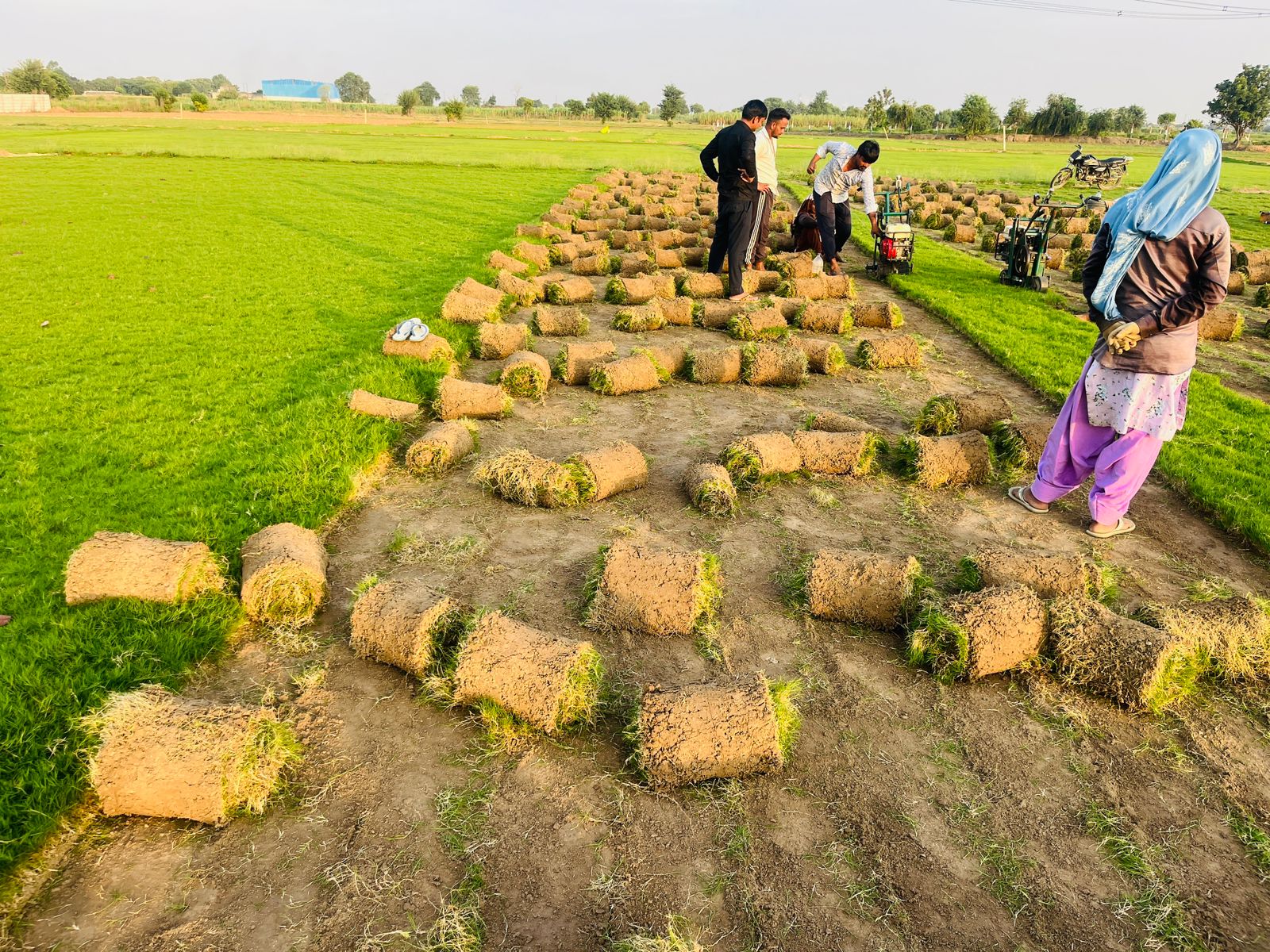
If prolonged monsoon rains or severe fungal blight have destroyed patches of your natural lawn, Kavya Grass Nursery provides on-site soil aeration, anti-fungal soil treatments, and fresh, farm-harvested replacement turf rolls across Delhi NCR, Punjab, and Haryana.
Call or WhatsApp Our Agronomy Team: +91-6394742039
Explore More: Professional Lawn Care & Fungus Treatment | Turnkey Sod Installation
About the Author
Kavya Grass Nursery is a leading supplier of premium lawn grasses in India. We specialize in Mexican Carpet, Bermuda, and Korean Velvet grass, helping homeowners and businesses create stunning green spaces.